Computer Station Nation is reader-supported.
When you buy through links on our site, we may earn an affiliate commission. Learn more.
You’ve got two choices when it comes to streaming lights: ring lights and LED panels. Both work. Neither is automatically better. The right call depends on what you’re shooting, where you’re sitting, and how much you care about looking like a professional vs. looking like someone who tried.
I’ve used both. Here’s my honest breakdown.
The quick answer
Ring lights are better for solo face-cam setups where you’re close to the camera. LED panels are better for larger spaces, two-person setups, and situations where you want more control over your lighting look.
What a ring light does well
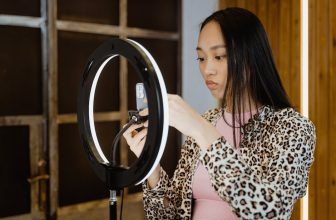
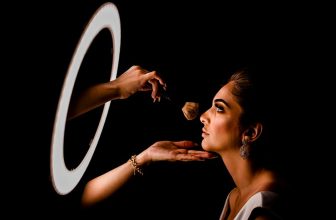
Ring lights wrap light around your face in a circular pattern. That circular catchlight in your eyes — the little ring reflection — looks good on camera and reads as “professional streamer” to most viewers. They’re also simple: mount it, point it at your face, done.
Ring lights shine when:
- You’re doing a close-up face cam (within 2–3 feet)
- You want even, flattering skin tones with minimal setup
- You’re working in a small space or cramped desk corner
- You’re new to streaming and just need something that works
The signature ring catchlight also makes you look engaged and alert on camera — something a flat panel doesn’t naturally create.
Where ring lights fall short
Sit back from the camera and ring lights lose their punch. At 4–5 feet, you’re losing the even wrap effect. At 6+ feet, it’s basically just another light source.
They also create a hollow shadow pattern around you if there’s nothing behind or to the sides. That can look flat and studio-ish in a bad way — like a passport photo instead of a live set.
And if you wear glasses? Ring lights create a very visible circular reflection in your lenses. There are workarounds (angle the ring slightly above eye level, move it off to one side), but it’s an ongoing battle.
What an LED panel does well
LED panels give you more flexibility. You can use them as key lights (primary illumination), fill lights (fill the shadows), or background lights. A two-panel setup — one key, one fill — gives you dimensional lighting that looks cinematic compared to a single ring light.
LED panels work better when:
- You sit 4+ feet from the camera
- You want to light a background or a wider scene
- Two people are on camera at once
- You’re building a more controlled studio look
- You wear glasses (panels can be positioned to avoid lens reflections)
Panels are also more upgradeable. You can start with one and add a second later. You can get panels with barn doors to shape the light. Some let you control color temperature and brightness from an app.
Where LED panels fall short
Setup is more involved. You need to think about placement — where the key light goes, where to put the fill, what the background is doing. That’s not hard, but it’s more decisions than “mount ring light, point at face.”
Good panels cost more than comparable ring lights. A decent ring light runs $30–80. A decent LED panel starts around $60–100 and you usually want two, so budget accordingly.
Small panels (under 6 inches) also struggle to fill a face from a distance. You need a panel that’s appropriately sized for your distance — a 6×6″ panel at 5 feet isn’t going to cut it.
Side-by-side comparison
| Ring Light | LED Panel | |
|---|---|---|
| Best distance | 2–3 feet | 3–6+ feet |
| Setup complexity | Low | Medium |
| Glasses-friendly | No (reflections) | Yes (angled easily) |
| Scene/background lighting | No | Yes |
| Catchlight shape | Ring (signature look) | Square/rectangular |
| Entry-level price | $20–40 | $60–100 (×2 ideal) |
| Best for beginners | Yes | Possible, more setup |
| Best for studio setups | Limited | Yes |
What most streamers actually use
Beginners almost always start with ring lights. They’re cheap, simple, and the results are immediately good enough to stream with. That’s not nothing.
Streamers who stick with it and care about production quality usually migrate toward a two-panel setup — one key light at 45 degrees, one fill at reduced power on the opposite side. The look is just better for longer-term viewing.
Some streamers use both: a ring light close for face illumination and a panel to light the background behind them. It’s overkill for most people but it does look great.
My recommendation
Start with a ring light if you’re new, working in a small space, or just want something that works today. A $30–50 ring light with adjustable color temperature will get you 80% of the way there.
Move to LED panels if you’ve been streaming a while, sit back from the camera, wear glasses, or want to level up your production quality. Budget $150–200 for a solid two-panel kit and you’ll have lighting that holds up to any streaming setup at any price.
Neither choice is wrong. One just takes more effort to dial in.
FAQ
Can I use both a ring light and an LED panel?
Yes. Some streamers use a ring light as a close-in key light and a panel to fill the background. Just make sure color temperatures match (both at 5600K or both at 3200K) or you’ll get mixed warm/cool tones that look bad on camera.
Do ring lights work if I’m far from the camera?
Not as well. Beyond 3 feet, the even wrap effect drops off significantly. If your camera is mounted 4+ feet away, a panel will give you better coverage.
What size ring light should I get for streaming?
10–12 inches is the sweet spot for desk streaming. Smaller ones (6″) don’t throw enough light. Larger ones (18″+) are designed for standing photography setups and are awkward at a desk.
How do I avoid ring light reflections in my glasses?
Position the ring light slightly above eye level and angled downward. This shifts the reflection from the lens center toward the top of the frame, where it’s less visible. Alternatively, switch to a panel light positioned off to the side — the rectangular reflection is much easier to angle out of the shot.