Computer Station Nation is reader-supported.
When you buy through links on our site, we may earn an affiliate commission. Learn more.
Finalmouse Starlight-12 — review summary
This item is final sale. It is not eligible for returns
Overall rating: 8.5/10
Verdict: The Starlight-12 is the lightest wireless mouse most people will ever hold. The carbon fiber build, 42g weight, and 160-hour battery are genuinely remarkable. The $189-$331 price and limited drop availability make it a niche buy. If you can get one at retail and can afford it, there is nothing lighter with comparable wireless performance.
42 grams. Wireless. Carbon fiber. Is it worth $200?
Finalmouse is a small company that sells gaming mice in limited drops at prices most people would call excessive. The Starlight-12 starts at $189 for the Small size and goes up from there. You can’t walk into a store and buy one. You wait for a drop announcement, put in your order when it opens, and either get one or miss it. Deliberately polarizing strategy.
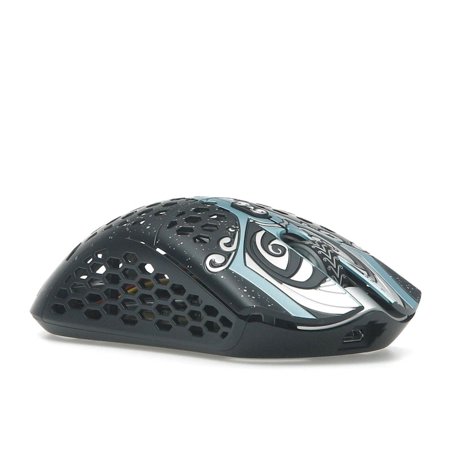
The mouse itself earns some of that attention. At 42 grams, the Starlight-12 Medium weighs less than most wired gaming mice without batteries. The carbon fiber shell is the reason. Most gaming mice use injection molded plastic bodies. Finalmouse machines a carbon fiber lattice structure for the Starlight-12 — extraordinary weight reduction without sacrificing structural integrity.
Is a $200+ mouse worth buying? For most players, no. But this review is for the players who want to understand what the ceiling looks like and whether it’s worth the price and availability headache.
Specifications
| Sensor | Finalmouse FinalsensorTC |
| DPI range | 400 – 3,200 DPI |
| Polling rate | 1,000 Hz |
| Weight (Medium) | 42g |
| Dimensions (Medium) | 119 x 63 x 39mm |
| Connection | 2.4GHz wireless |
| Battery life | ~160 hours |
| Shell material | Carbon fiber |
| Buttons | 5 |
| RGB | None |
| Software | No dedicated software |
| Availability | Limited drops |
Design and build
Picking up the Starlight-12 for the first time is disorienting. You reach for it expecting weight and there’s almost nothing there. At 42g, it’s lighter than a standard AA battery. The carbon fiber lattice construction is what makes this possible — each side panel has an open weave pattern. You can see through parts of the mouse body to the internals.
The shape is a symmetrical medium-size design. Not ergonomic, not tall. It sits low to the desk and suits claw and fingertip grip most naturally. Palm grip players with large hands will find it too short. The Small version (sold separately) is specifically for smaller hands, which is unusual — most mouse manufacturers go large rather than small with their lineup.
Build feel is good given the weight. The carbon fiber panels feel rigid, not hollow plastic. Main buttons have clear travel and a firm click. No flex in the shell when you grip it. Side buttons are smaller than most mice and require intentional presses — accidental activations aren’t a problem.
No RGB. No software. No indicator lights beyond a single power LED. Finalmouse built a product with one job — be as light as possible while actually working — and that shapes every design decision.
Performance and sensor
The FinalsensorTC is Finalmouse’s custom sensor work on top of a PixArt base chip. The DPI ceiling is intentionally capped at 3,200 DPI, lower than most gaming mice. Finalmouse argues that high DPI settings introduce noise and that most competitive players use under 1,600 DPI anyway. They’re not wrong — but the cap will bother buyers who want flexibility.
At 400-1,600 DPI — the typical competitive range — tracking is clean. No angle snapping. No acceleration. Short lift-off distance. The sensor behaves consistently across cloth and hard mouse pads. No jitter on slow tracking movements, which is where some budget sensors fall apart.
The wireless connection is 2.4GHz with a small USB-A receiver. No detectable latency in day-to-day FPS use. Battery life of 160 hours is exceptional. At 2 hours of gaming per day, 5 days a week, you’re charging this thing roughly 4-5 times a year. A total non-issue.
Click latency is competitive with other flagship mice. The main buttons use a mechanical switch, not optical. Long-term double-click durability over 2+ years of heavy use is something the community is still collecting data on, given how relatively new the model is.
Software and updates
There’s no Finalmouse software. DPI changes by cycling through four presets using a button on the underside of the mouse (400, 800, 1,600, 3,200 DPI). Polling rate is fixed at 1,000 Hz. Button remapping isn’t possible. Per-game profiles, custom DPI steps, RGB sync — none of that.
For competitive FPS players who set their DPI once and leave it alone, the lack of software is irrelevant. For players used to feature-rich software like Logitech G Hub or Razer Synapse, it’s an adjustment.
Long-term reliability
The Starlight-12 launched in late 2021 and has gone through several drops. Long-term reports from early owners show the carbon fiber shell holds up well. No cracking, no delamination in the reports surveyed. The main concern owners raise is the small side buttons wearing down more quickly than main clicks on some units.
Finalmouse doesn’t offer standard retail warranty service. Support is handled through their website. Given the limited availability and premium pricing, that’s worth knowing upfront — if something fails outside the purchase window, resolution is less straightforward than with Razer or Logitech.
Verdict
The Starlight-12 makes a compelling case on hardware alone. 42g wireless with 160-hour battery and a clean sensor is a combination nobody else offers. If weight is your primary constraint and budget isn’t, there’s no direct competitor.
Who should buy it: competitive FPS players who’ve already optimized everything else and want the lightest possible mouse, players with hand fatigue issues that lighter mice help, collectors who want the premium end of gaming hardware.
Who should skip it: players who need software control over DPI and buttons, players who want warranty support comparable to major brands, anyone who can’t justify $200+ for a mouse, and basically anyone who plays MMO or other button-heavy genres.
The Logitech G Pro X Superlight 2 at $150 gets you 60g wireless with arguably better sensor specs, better software, better warranty, and easier availability. It’s 18 grams heavier. Most players should buy the Superlight 2. The Starlight-12 is for the players who specifically want those 18 grams back and are prepared to pay for them.
Competitors compared
| Mouse | Price | Weight | Battery | Software |
|---|---|---|---|---|
| Finalmouse Starlight-12 Medium (this review) | $189–$331 | 42g | 160 hrs | None |
| Logitech G Pro X Superlight 2 | $149.99 | 60g | 95 hrs | G Hub |
| Razer DeathAdder V3 Pro | $99.99 | 63g (wireless) | 90 hrs | Synapse |
Where to buy
This item is final sale. It is not eligible for returns
Frequently asked questions
Is the Finalmouse Starlight-12 worth the price?
For most players, no. The Logitech G Pro X Superlight 2 gives you similar wireless performance and a proven flagship sensor for less money, with easier availability and real software support. The Starlight-12 makes sense for players who specifically want the lightest possible option, have already considered the Superlight 2, and decided weight matters more than price.
Does the carbon fiber shell feel fragile?
No. Carbon fiber is stronger per weight than most plastics used in gaming mice. The lattice design means you can see through parts of the shell, which looks fragile — but it isn’t. Long-term ownership reports don’t show cracking under normal use. Dropping it on a hard floor is a different matter, same as any mouse.
Can I use the Starlight-12 wired?
No. The Starlight-12 is wireless only. No wired mode. The battery charges via USB-C. Given the 160-hour battery life, running out mid-session is unlikely with any normal charging routine.
Which size should I buy: Small or Medium?
Use your hand length as a guide. Under 17cm: Small. 17-20cm: Medium. Over 20cm: the Medium may feel short. Finalmouse recommends fingertip grip players can size down — if you fingertip-grip with an 18cm hand, Small may work. The Small is lighter (around 40g). If in doubt and your hand falls in the Medium range, buy the Medium.