Computer Station Nation is reader-supported.
When you buy through links on our site, we may earn an affiliate commission. Learn more.
Keyboards get gross. If you’re also shopping for a new board, check our best mechanical keyboards 2026 guide. Food crumbs, hair, dust, and the accumulated residue of everything your hands touched before you sat down — it all ends up in the gaps between your keycaps. Cleaning a mechanical keyboard is straightforward and takes about 20 minutes. Here’s how.
What You Need
Keycap puller (or two bent paperclips in a pinch). Compressed air can. Soft brush (a new paintbrush works). Isopropyl alcohol (90%+). Microfiber cloth. Optional: switch puller if you want to do a deep clean.
Quick Clean (15 Minutes)
Unplug the keyboard first. Flip it upside down and give it a few firm shakes — a lot of debris will fall out immediately. Use compressed air to blast through the gaps between keys, moving in rows from top to bottom. A soft brush helps with anything that sticks. Wipe down keycaps and the chassis with a slightly damp microfiber cloth. Done.
Do this monthly if you eat near your keyboard, or whenever you notice it looking or feeling off.
Deep Clean (1 Hour)
For a thorough clean, pull all the keycaps off. A keycap puller (usually comes with the keyboard, or under $5 on Amazon) hooks under the cap so you can pull straight up without damaging the switch stem.
Soak keycaps in warm water with a small amount of dish soap for 20 to 30 minutes. Rinse well, then let them dry completely — at least a few hours, ideally overnight. Don’t put wet keycaps back on.
While keycaps are soaking, clean the exposed PCB and plate with compressed air and a brush. Use isopropyl alcohol on a cotton swab for stubborn buildup around the switch stems. Avoid getting liquid into the switch housings.
Cleaning Individual Switches
If a switch feels sticky or is registering inconsistently, isopropyl alcohol can fix it. Remove the keycap, dip a cotton swab in 90%+ isopropyl alcohol (high concentration dries faster and leaves less residue), and swab around the switch stem. Press the switch a few times while it’s damp to work the alcohol into the mechanism. Let it dry fully before using.
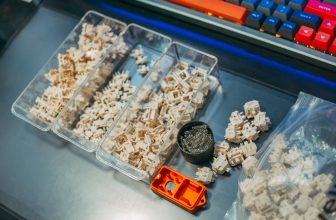
For hot-swap boards, you can pull the switch and clean it separately — much easier to get to all the surfaces.
What to Avoid
Water in the switch housing — let it dry fully before plugging back in if any moisture got in. Regular rubbing alcohol (70%) — use 90%+ to avoid water residue. Harsh cleaning products — they can damage legends on keycaps or cloud the plate. Reassembling while anything is still damp.
Maintaining Switch Feel Over Time
Lubing switches improves feel and reduces noise. For hot-swap boards, pull the switches, open the housing, apply a thin coat of switch lubricant (Krytox 205g0 for linears, Tribosys 3203 for tactiles), and reassemble. A full board takes 30 to 45 minutes. Not mandatory, but the difference is noticeable — especially on linear switches.