Computer Station Nation is reader-supported.
When you buy through links on our site, we may earn an affiliate commission. Learn more.
Small home offices have real constraints. The desk has to fit the space, not the other way around. Here’s how to approach picking one that actually works.
Measure first, buy second
The single most important step. Measure your available floor space, then subtract clearance for the chair (at least 24 inches of depth when pulled out) and movement around the desk. What’s left is your actual maximum desk footprint.
Most people overestimate available space and underestimate chair clearance. Do the math before you look at any desk.
Consider the room shape
Corner desks (L-shapes) are often the best solution for small rooms. They use corner space that’s otherwise dead floor area and give you more surface area per square foot than a straight desk. A 31″ x 31″ L-shape in a corner uses the same footprint as a 31″ straight desk but gives you significantly more usable surface.
Wall-mounted floating desks eliminate the floor footprint entirely. If floor space is critically limited, a floating desk mounted at the right height frees up the floor for other use.
Prioritize vertical storage over horizontal
Small desks mean less desktop space for storage. Go vertical instead. A wall-mounted shelf above the desk handles books, peripherals, and accessories without taking up floor or desktop area. Under-desk drawer units on wheels add storage that tucks away when not needed.
Pick the right width
For a laptop-only setup: 28–32 inches works fine. For a single external monitor: 40 inches minimum. For dual monitors: not realistic on a small-room budget unless you go with an L-shape or floating setup. Know which category you’re in before buying.
Think about depth
Desk depth (front to back) matters more than people realize. A 20-inch-deep desk puts a 27-inch monitor too close. Standard depth is around 24 inches — go shallower than that and you’ll feel it. If your room is tight on width, a deeper desk can sometimes give you a better monitor distance without needing to widen the desk.
FAQ
What is the minimum desk size for a home office?
For a laptop or single small monitor: 30 inches wide by 20 inches deep. For a full desktop with a standard 24-inch monitor: 40 inches wide by 24 inches deep. Below these minimums you’ll constantly run out of space.
Should I get an L-shaped desk for a small room?
If you have a corner available, yes. An L-shape uses space that a straight desk leaves dead. The total footprint is similar but you get substantially more surface. The main constraint is that L-shapes need a full corner — they don’t work against a single wall.
What’s better for a small office: a standing desk or a regular desk?
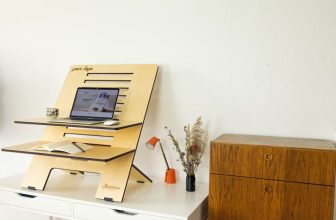
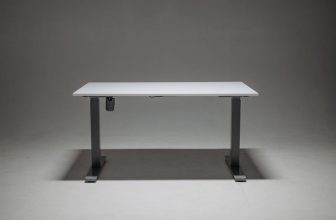
A fixed-height desk usually fits better in small spaces because motorized frames add leg width and mechanism depth. If sit-stand functionality is important to you, a desk converter (placed on top of your existing desk) is a more space-efficient option than replacing the entire desk.