Computer Station Nation is reader-supported.
When you buy through links on our site, we may earn an affiliate commission. Learn more.
The honest answer: it depends on how you actually work. Here’s a straight comparison so you can decide without wading through marketing claims.
What’s the actual difference?
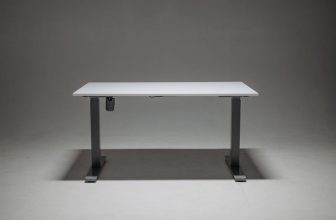
A traditional desk is a fixed-height surface, typically 28–30 inches off the floor. You sit at it. An adjustable standing desk (sit-stand desk) has a motorized or manual mechanism that raises and lowers the surface so you can alternate between sitting and standing throughout the day.
The “standing desk” name is slightly misleading — the real benefit isn’t standing all day, it’s being able to switch between positions.
The case for a sitting desk
Fixed-height desks are cheaper, simpler, and more stable. At the budget and mid-range price points, you get more surface area and better build quality in a sitting desk than in a sit-stand desk at the same price. If you’re buying under $150 and stability matters to you, a sitting desk wins.
They’re also less failure-prone. Motorized mechanisms can break. A fixed desk frame has no moving parts to maintain.
The case for a standing desk
Sitting for 8+ hours a day puts sustained load on your spine and reduces circulation. Regular movement during the day — even just standing for 30-minute stretches — reduces fatigue and back discomfort over time. Multiple studies back this. You don’t need to stand for hours; you need to break up extended sitting.
Electric sit-stand desks are now available under $100. That removes most of the cost argument against them.
The honest trade-offs
| Traditional desk | Standing desk | |
|---|---|---|
| Price | Lower at same quality | Higher at same quality |
| Stability | Generally more stable | Can wobble at max height |
| Surface options | More variety | More limited |
| Health benefit | None specific | Reduces prolonged sitting |
| Complexity | None | Motor/mechanism to maintain |
Who should get a standing desk?
If you work at a desk for 6+ hours on most days and experience back fatigue or stiffness by end of day, a sit-stand desk will help. If you primarily game for shorter sessions or work part-time from home, the ergonomic benefit is less compelling.
Who should stick with a traditional desk?
Budget buyers. Anyone who prioritizes surface size or stability over ergonomic adjustment. Anyone who already moves around frequently during their workday and isn’t sedentary for long stretches.
FAQ
Is standing all day better than sitting?
No. Standing all day creates its own problems — varicose veins, foot and knee strain. The goal is movement and alternation, not replacing sitting with standing. Sit-stand desks work best when you actually switch positions regularly throughout the day.
How much should I budget for a good standing desk?
Entry-level electric sit-stand desks start around $90–120. Mid-range desks with better stability and programmable height presets run $200–400. Budget options are fine for light use; if you’re standing for multiple hours daily, invest in a sturdier frame.