Computer Station Nation is reader-supported.
When you buy through links on our site, we may earn an affiliate commission. Learn more.
Desk design has changed a lot in the last few years. The old formula — flat surface, four legs, maybe a drawer — is still around, but the options have expanded well beyond it. Standing desks, motorized frames, cable management built into the surface, integrated lighting, modular panels — there’s a lot happening in the space right now.
Here’s what’s driving the shift and which design directions are worth paying attention to.
The standing desk went mainstream
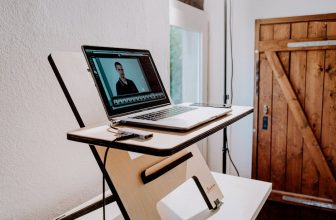
Five years ago a sit-stand desk was an office perk you got at a fancy tech company. Now they’re widely available under $100. The electric motor mechanism got cheaper, the frames got lighter, and the market responded. Motorized standing desks are the single biggest shift in consumer desk design in the last decade.
The result is that “desk” no longer implies a fixed-height object. A modern desk setup increasingly assumes some form of height adjustability — either a full motorized frame or at minimum adjustable-leg height settings.
L-shapes took over the battlestation
Corner desks have been around forever, but the L-shaped gaming desk became a category unto itself. The combination of corner surface area and gaming-specific features (monitor risers, RGB, cable management cutouts) made the L-shape the default format for serious PC gaming setups.
What’s changed more recently is that the L-shape is crossing over into home office design. The same corner format that works for a battlestation also works for a dual-monitor WFH setup. The aesthetics have cleaned up — less aggressive “gamer” styling, more furniture-grade finishes. The white and walnut color palette is showing up on L-shaped desks now as often as the black and carbon fiber.
Integrated cable management became expected
Grommets (cable routing holes) used to be a feature you paid extra for. Now they’re standard on mid-range and up. More desks include built-in cable trays — mounted channels under the surface that keep your power strip and cable runs organized without any add-ons.
The driver is aesthetics. Desk setup culture on Reddit and YouTube has raised the bar for what a “clean setup” looks like, and that’s pushed demand for better built-in cable management at every price tier.
Modular and wall-mounted systems are gaining ground
For small spaces and minimalist setups, wall-mounted floating desks eliminate the floor footprint entirely. The surface mounts directly to the wall — no legs, no frame on the floor. Combined with wall-mounted shelving and monitor mounts, the result is a workspace that doesn’t visually crowd a room.
Modular desk systems (mix-and-match legs, surfaces, add-on shelves) are also growing. The IKEA Kallax/Alex combo approach — build a desk from components rather than buying a finished unit — has become a standard recommendation in setup communities because it lets you configure for your exact space and expand over time.
Smart desks are real but niche
The “smart desk” category — desks with memory height settings, USB charging built into the surface, Bluetooth connectivity, app integration — exists and is growing. The Uplift and FlexiSpot higher-end models include programmable height presets. Some include anti-collision sensors.
The utility is real for people who actively use sit-stand functionality throughout the day. For most buyers, though, smart features are secondary to surface area, stability, and price. The smart desk market is currently where smart TVs were in 2012 — the technology is there, but most buyers aren’t buying for the smart features specifically.
What this means for your setup
The practical takeaway from all of this is that the desk market is genuinely better now than it was five years ago. More options, better value at lower price points, more design choices that work for both home offices and gaming setups.
The choice has gotten harder as a result — more options means more decisions. But the fundamentals haven’t changed: get the right size for your space, prioritize stability, and let cable management be something you actually set up on day one rather than a project for later.
FAQ
Are standing desks worth buying for a home office?
For anyone who works at a desk for 6+ hours a day, yes. The health argument for alternating sitting and standing is well-supported. Electric motorized desks are now available under $100, which removes most of the cost barrier.
What is a modular desk system?
A modular desk is built from separate components rather than bought as a single finished unit. You choose the surface, the legs, and any add-ons (shelves, drawers) independently. The main advantage is flexibility — you can reconfigure or expand without replacing the entire desk.
How long do cheap desks last?
With normal use (no overloading, no liquid damage to the surface), a budget MDF desk with a steel frame typically lasts 3–5 years. Premium solid wood desks last significantly longer. The failure point on cheap desks is usually the MDF surface chipping or swelling from moisture, not the frame.