Computer Station Nation is reader-supported.
When you buy through links on our site, we may earn an affiliate commission. Learn more.
Wired vs. wireless is a real question with a real answer — it just depends on what you’re actually doing with the headphones. I’ll give you the honest breakdown without declaring a winner that applies to everyone.
Quick verdict
- Stationary desk / battlestation: wired wins on value and sound quality
- Commuting / gym / mobile: wireless wins on practicality
- Competitive gaming: wired or 2.4GHz wireless (not Bluetooth)
- Casual gaming and music at home: wireless is fine
- Professional audio / recording: wired, no question
The case for wired
A wired connection is a direct analog signal from your source to your ears. No compression, no latency, no battery management. A $50 wired headphone can sound better than a $100 Bluetooth headphone because the wireless transmission involves audio compression even with high-quality codecs like LDAC.
Zero latency matters for gaming and video work. Bluetooth latency is typically 100–200ms on standard SBC codec — barely noticeable for music, clearly noticeable if you’re watching video where audio and visual don’t sync, and genuinely problematic for competitive gaming.
Wired headphones also never die mid-session. No charging ritual, no “battery critically low” interruption at 11pm. And they work with anything that has a 3.5mm jack — no pairing, no Bluetooth compatibility issues, no app required.
The case for wireless
Cables are a genuine quality-of-life annoyance that compounds over time. They snag on chairs, tangle in bags, fail at the jack after a year of bending. The freedom to move around without thinking about your headphone cable is something you don’t fully appreciate until you’ve had wireless for a while.
Modern wireless codecs have genuinely closed the audio gap. Bluetooth 5.0+ with aptX HD or LDAC delivers audio quality that most listeners cannot reliably distinguish from wired in blind tests. The gap exists — wired is technically superior — but at equivalent price points, most people won’t hear it.
For mixed-use headphones (gaming at home + commute + work calls), wireless handles everything without swapping cables or carrying adapters. That convenience has real value.
The gaming exception: Bluetooth vs. 2.4GHz
For gaming specifically, Bluetooth latency is the issue. Standard Bluetooth (SBC codec) at 100–200ms of latency is noticeable in fast-paced games. The fix isn’t “just use wired” though — gaming wireless headsets now commonly use 2.4GHz USB dongles instead of Bluetooth, which brings latency down to 15–20ms. Imperceptible in practice.
So the real question for gaming is: wired 3.5mm, OR 2.4GHz wireless dongle. Bluetooth-only wireless is the option to avoid for serious gaming.
Current wireless picks
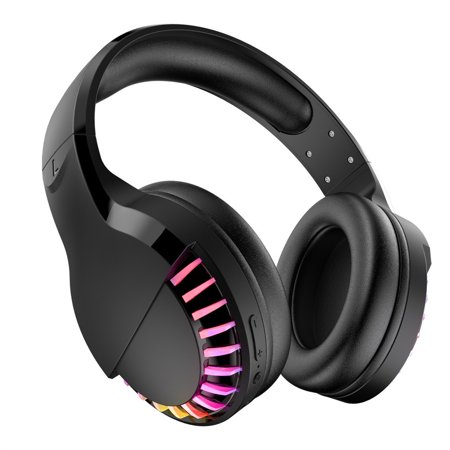
SH33-Mode Bluetooth V5.0 Wireless/ Wired RGB Gaming Headset Foldable Stereo Noise Cancelling Headset Feature: 1. speaker, high, medium and low-quality experience. 2.The earmuffs are made of protein cotton to better isolate the surrounding environment, and comfortable to wear. 3.The earphone is...

Enjoy wireless freedom and high-quality audio with the WIGACH Bluetooth Headphones. Featuring a comfortable over-ear design, foldable portability, and long-lasting battery life, these headphones provide an immersive listening experience for travel, office, or everyday use. With advanced...
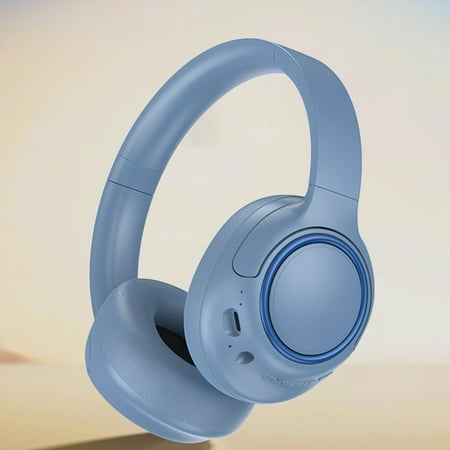
Head Mounted Wired And Wireless Double Mode Foldable Soft Headband Low Latency High Battery 5.4 Sports Gaming Bluetooth Headphones Earphones Specifications: Product Name: Head mounted double mode Bluetooth earphones Product colors: Blue Product Material: Plastic Bluetooth version: 5.4 Distance:...
Side-by-side comparison
| Factor | Wired | Wireless (BT) | Wireless (2.4GHz) |
|---|---|---|---|
| Latency | ~0ms | ~100–200ms (SBC) | ~15–20ms |
| Audio quality | Best per dollar | Good (aptX/LDAC) | Good |
| Battery needed | No | Yes | Yes |
| Portability | Limited by cable | Full freedom | Dongle range only |
| Best for gaming | Yes | Casual only | Yes |
| Best for commute | Works, less ideal | Yes | No (dongle) |
| Price per quality | Better | Slightly worse | Slightly worse |
What I’d actually buy
For a home battlestation that stays on the desk: wired. Better sound quality for the money, no battery anxiety, zero latency for gaming. A $40 wired headset from SteelSeries or Audio-Technica will outperform a $40 Bluetooth headphone every time.
For someone who uses headphones on the go and at home: wireless, specifically something with aptX or LDAC support so the audio quality is actually competitive. Sony’s WH-CH520 at $54 is where I’d start — great battery, reliable Bluetooth, Sony tuning.
For more wireless options see our best wireless headphones guide. For the full category overview, including noise cancellation, use cases, and budget tiers, see the complete headphones guide.
FAQ
Can you really tell the difference between wired and wireless audio?
In blind tests with high-quality Bluetooth codecs (aptX HD, LDAC), most people cannot reliably identify which is wired vs. wireless. The technical difference exists, but it’s smaller than marketing would have you believe. For critical listening with high-end headphones, wired is still preferred. For everyday casual use, wireless is essentially equivalent.
Do wireless headphones cause interference?
Bluetooth headphones can experience interference in crowded RF environments (airports, busy offices with lots of BT devices). Modern Bluetooth 5.0+ is significantly more resilient than older versions. 2.4GHz gaming headsets can also experience interference from Wi-Fi routers on the same frequency — most resolve this automatically, but it’s worth knowing if you experience dropouts.
Are wireless headphones safe to use for long periods?
Yes. Bluetooth emits non-ionizing radiation at extremely low power levels (much less than a phone call). There is no credible scientific evidence that Bluetooth headphone use poses health risks. The concern you occasionally see online isn’t supported by the research.