Computer Station Nation is reader-supported.
When you buy through links on our site, we may earn an affiliate commission. Learn more.
Mechanical keyboards cost more, make more noise, and take up more desk space than the membrane keyboard that probably came with your computer. See our best mechanical keyboards picks when you’re ready to buy., and take up more desk space than the membrane keyboard that probably came with your computer. People buy them anyway — and once they do, almost nobody goes back. Here’s why that is.
The Feel Is Actually Different
The most common reaction from someone trying a mechanical keyboard for the first time is surprise at how different it feels. Membrane keyboards have a squishy, imprecise quality — the rubber dome gives way gradually with no clear actuation point. Mechanical switches have a definite moment of registration, whether that’s a tactile bump, an audible click, or a smooth but consistent linear stroke. The difference is immediately noticeable and hard to go back from.
For typing, this translates to better accuracy. You know when a key registered. There’s no ambiguity about whether you pressed hard enough. Many people report fewer typos after switching to mechanical, especially on tactile or clicky switches.
They Last Much Longer
Rubber dome keyboards are rated for roughly 5 to 10 million keystrokes before the domes start to feel inconsistent or fail. Mechanical switches are rated for 50 to 100 million keystrokes. At heavy use (10 million keystrokes a year), a membrane keyboard degrades in under a year. A mechanical keyboard at the same use rate lasts 5 to 10 years.
And when a mechanical switch does fail, you can replace just that switch (on hot-swap boards, no tools needed). When a rubber dome membrane board fails, you replace the whole thing.
Gaming Performance Is Genuinely Better
Mechanical keyboards have full N-key rollover — every simultaneous keypress registers correctly. Most budget membrane boards are limited to 3 to 6 simultaneous keypresses, which can cause missed inputs during fast gaming. Mechanical boards also have more consistent actuation across all keys — no variation in dome feel across the keyboard, no one key that feels softer than the others.
The Customization Options Are Unmatched
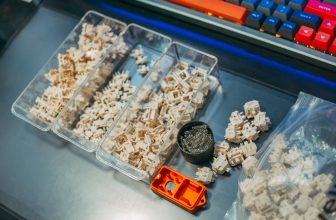
Hot-swap mechanical keyboards let you change the entire feel of the board by swapping switches — no new keyboard required. You can try linear for gaming, swap to tactile for a typing-heavy work sprint, and swap back. Keycap sets let you change the look completely. Lubing and modding the switches changes the acoustic profile. No membrane keyboard offers anything close to this level of customization.
The One Real Downside
Noise. Clicky mechanical switches are genuinely loud — not appropriate for shared offices, late-night sessions, or anyone within earshot who didn’t ask for the soundtrack. Silent mechanical switches (Cherry MX Silent Red, Gateron Silent variants) bring the noise down significantly, but even tactile switches without clicks are louder than membrane boards. If noise is a serious constraint, it requires picking switches carefully rather than avoiding mechanical altogether.