Computer Station Nation is reader-supported.
When you buy through links on our site, we may earn an affiliate commission. Learn more.
Staring at a screen that fights you all day gets old fast. A monitor built without any eye-care tech in mind can turn something as simple as reading email into real eye strain, and if you’re already dealing with low vision, a bad setup makes everything harder than it needs to be.
Having low vision doesn’t mean giving up on a solid computer setup. It means being a little smarter about what you buy and how you set it up. Below are our top three picks for computer monitors built around vision-care tech, plus what actually matters beyond the monitor itself — because hardware is only half the equation.
How we picked these: we looked at monitors with real vision-care features baked in — blue light filtering, anti-flicker backlighting, wide brightness ranges, and matte anti-glare coatings — cross-checked against manufacturer specs and buyer feedback. These aren’t clinically tested for any specific eye condition. If you have a diagnosed vision impairment, loop in your eye doctor or an assistive technology specialist before you buy — treat this as a starting point, not a substitute for professional guidance.
Our Top 3 Picks For The Best Computer Monitor For Low Vision
Viewsonic VX2457-MHD
1080P For Low Vision
The Viewsonic VX2457 prioritizes eye protection by integrating eye-care technologies, blue light filters, and anti-flickers to cater to people with low vision and ensure that they have a thrilling viewing experience without straining their eyes.
It is also equipped with black stabilization technology that provides heightened and clearer visibility by brightening dark scenes. This monitor supports 350 nits of brightness, a 1080p resolution with a 16:9 aspect ratio that enables the monitor to maintain rich colors and contrast for an immersive viewing experience.
It has a 75Hz refresh rate, a 2ms response time, and a game mode hotkey that opens pre-calibrated customizable visual modes for FPS, RTS, and MOBA settings that deliver the best blend of color and technology for specific gaming scenarios.
In addition to the game mode hotkey, this monitor features three customizable gamer settings that provide individual user preferences for specific games and Freesync technology for fluidity and lack of screen tear even in fast-paced, action-packed videos by synchronizing the frame rate output between the graphics card and the monitor.
This 24” Viewsonic monitor is built for entertainment and gaming. It integrates internal speakers, Kensington lock slot, headphone/audio input port, an HDMI port, DisplayPort, a VESA compatible wall mount pattern, menu control buttons, and a cable management ring a three-year coverage with access to the US-based customer service team.
Pros and Cons
Pros
- It supports a 1080p resolution.
- It has a Kensington lock slot.
- It has Freesync
Cons
- It has thick bezels.
- It does not have speakers.
Acer KB272HL
AMD Radeon Freesync Technology For Low Vision
Built as a full HD widescreen 27” monitor, the Acer KB272HL computer monitor offers a 1080p resolution in a 16:9 aspect ratio and 300 nits of brightness that displays clear and stunning visuals on its frameless screen.
It has a refresh rate of 75Hzand a response time of 4ms (GtG), and all its features are complemented by AMD Radeon Freesync technology that ensures that the images and video displayed on this monitor are lag-free and tear tree.
Acer monitor caters fully to individuals with low vision through its integrated technologies such as the Acer Visioncare technology, blue light shield, anti-flickers, low dimming technology for reducing the brightness to a 15% level in darker environments.
Comfy View display that limits the reflection from ambient light sources on the non-glare display panel. All these features are geared towards reducing eye strain and protecting the eyes from harmful lights.
This Acer computer monitor can be adjusted to a tilt angle of -5° to 25°. It also features an HDMI port and VGA port with included cables.
Pros and Cons
Pros
- It has AMD freesync technology.
- It has a 1080p resolution.
- It is built with a lot of vision care technologies.
Cons
- It is not VESA wall mountable.
- It does not have speakers.
Asus VA32UQ
4k Resolution For Low Vision
The Asus 32” computer monitor is built with Asus Eye care technology that incorporates anti-flickers and a blue light filter to minimize eye fatigue and ensure that the display contents do not become a problem for people with low vision.
This computer is equipped with HDR 10 that is highly suitable for adjusting the monitor’s HDR performance based on the contents being displayed on the screen.
The HDR technology synchronizes with a built-in shadow boost technology that brightens dark scenarios without overexposing the brighter areas to improve the overall picture without causing strain to the eyes.
The functions of these pre-installed technologies are complemented by its frameless screen, 178° viewing angle, and a 95% DCI-P3 color coverage to deliver smooth color gradation and a realistic viewing experience.
The fluidity employed in its videos is credited to the Adaptive-Sync/ Freesync technology that eliminates screen tear, stutter, and motion blur. This monitor also has 300% more onscreen space than similarly-sized Full HD displays, and it employs a 4k resolution to display pictures and videos on its frameless screen.
The Asus VA32UQ is equipped with DisplayPort, two HDMI ports, and two stereo speakers that produce loud sounds suitable for games and conferences.
Pros and Cons
Pros
- It supports a 4k resolution.
- It has HDR 10 and a 95% DCI-P3 color coverage.
- It has speakers
Cons
- It has thick bezels.
- It does not have adjustable features.
Bigger Monitor or Screen Magnification Software?
Before you spend money on a monitor, it’s worth asking whether the real fix is software, not hardware. Windows and macOS both ship with built-in screen magnifiers and high-contrast modes that cost nothing and take five minutes to turn on.
A bigger, sharper monitor helps most when text and images are naturally too small at a normal viewing distance. Magnification software helps more when the issue is contrast, color, or needing to zoom into specific areas without losing the whole picture. Most people end up using both — a properly sized monitor plus OS-level tools tuned to their needs. For general eye strain specifically, our guide to monitor backlights covers a cheap add-on that helps no matter which monitor you land on.
Turning On Accessibility Settings in Windows and Mac
Every low-vision setup should start here, before you spend a dime on new hardware.
On Windows, press the Windows key + Plus to open Magnifier, or go to Settings > Accessibility > Text size and Contrast themes to bump text size and switch to a high-contrast theme system-wide. Windows also has a Color Filters option worth checking out if color, not just size, is the issue.
On a Mac, System Settings > Accessibility > Zoom lets you scale the whole screen or just part of it, and the Display section has Increase Contrast and Reduce Transparency options that make UI elements easier to pick out against the background.
None of this replaces a good monitor. But pairing the right hardware with these settings is where you actually get the most usable screen.
Desktop or Laptop — Which Makes More Sense?
If you’re low vision and torn between a desktop and a laptop, the desktop usually wins. You get a bigger screen, more flexibility on monitor size and positioning, and the option to upgrade the display down the road without replacing the whole machine.
Laptops aren’t off the table — some 17″ models get you a decently large built-in display — but you’re locked into whatever screen ships with it. If portability is non-negotiable, treat an external monitor at your desk as mandatory, not optional.
Monitor Positioning Actually Matters
A great monitor mounted badly still causes eye strain. A flex-arm monitor stand lets you pull the screen closer and adjust height without craning your neck or squinting from across the desk — and viewing distance has an outsized effect on how much detail you can actually make out, more so than with a typical setup.
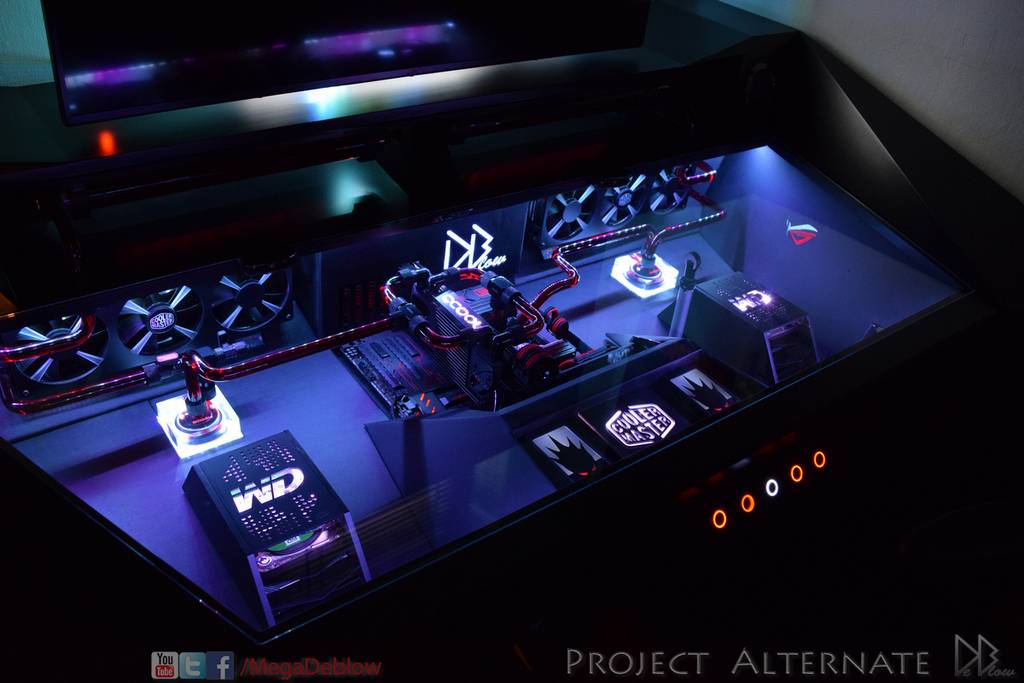
If your desk setup allows for it, a recessed monitor build can help too, by keeping the screen at a fixed, predictable distance instead of sliding around on a shelf or riser. That fixed distance is worth more than it sounds like on paper — once you know exactly how far the screen sits from your eyes, you can pick a size and text scale that actually works instead of guessing every time you sit down.
Frequently Asked Questions
Does screen size matter more than resolution for low vision?
Generally, yes. A bigger physical panel with adjustable text scaling helps more day-to-day than raw pixel count. In fact, a high-resolution display can work against you if the OS renders text and icons smaller by default — you’ll want to bump the scaling up regardless of resolution.
What’s the best monitor size for low vision?
Most people land somewhere in the 24″ to 32″ range. Going bigger than that runs into diminishing returns once you factor in desk space and how far back you’re sitting — a desk with the computer built in is one way to keep that viewing distance locked in instead of drifting further away over time as clutter piles up on a shelf.
Do curved monitors help with low vision?
Sometimes. A curve can reduce peripheral distortion at close viewing distances, which is useful if you sit near the screen. But you’re trading that for extra desk depth and a display that’s less friendly to off-center viewing angles, so it’s not a universal win.
Is a TV a good substitute if I just want something huge?
Usually not for desk use. TVs are built for couch viewing distances, and most lack the height and tilt adjustment a monitor stand gives you — which matters more here than in a typical setup, since dialing in the exact distance and angle is half the battle for reducing eye strain.
Don’t Stop at the Monitor
Vision is usually only one piece of an accessible setup. If tremors or shaky hands make a standard mouse frustrating on top of everything else, our roundup of the best computer mouse for Parkinson’s covers trackball and software options built for exactly that.
And if the visual impairment you’re dealing with goes beyond what a low-vision monitor alone fixes, our guide to the best computer monitor for visually impaired users covers displays built around assistive-tech integration specifically.
One more thing worth thinking about before you finalize anything: desk build quality affects the whole setup, not just the monitor. If you’re planning a full desk around any of this gear, how thick a computer desk should be actually plays a real role in stability and reach, especially if you’re mounting a monitor arm to it.
Conclusion
Low vision doesn’t mean settling for whatever monitor happens to be on sale. It means choosing one built around blue light control, anti-flicker backlighting, and a real brightness range — then setting it up right with OS accessibility tools and smart positioning on top.
Of the three picks above, the Asus VA32UQ stands out for anyone who wants the most screen real estate and color performance to work with. But honestly, any of these three will treat your eyes better than a bargain-bin monitor with none of this tech built in. Start with the free settings already on your computer, then build the hardware around them.
Need more options? You can always search on Amazon.com.